How Leak Detection Works
Leak detection follows an order. Each step either eliminates part of the property or narrows the search — and no step is skipped just because a symptom looks obvious.
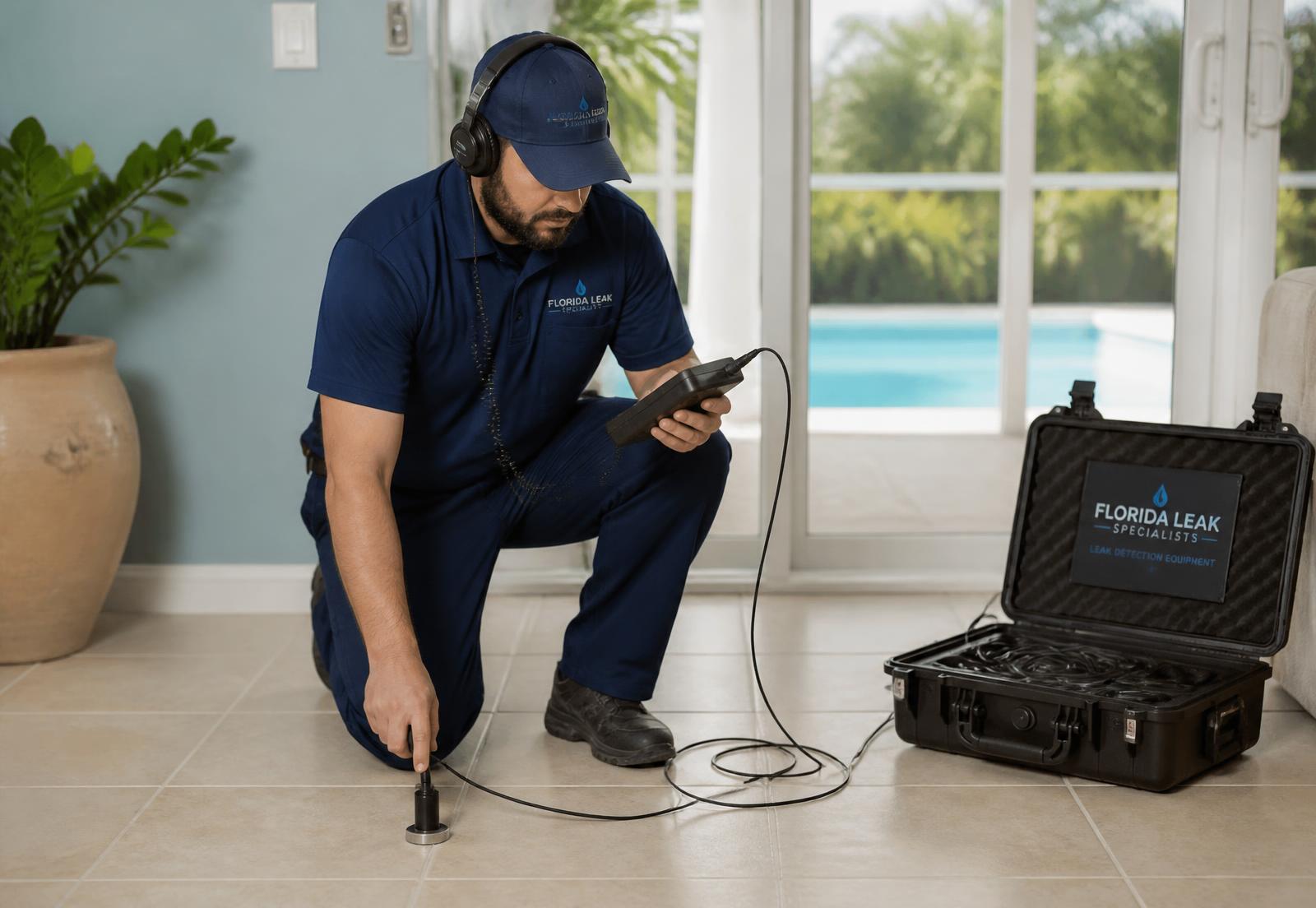
The Process
- 1
1. Identify the symptoms
What you are seeing, hearing, smelling or paying for. Onset, timing and whether it correlates with weather, hot water use or irrigation cycles.
- 2
2. Inspect the property
Construction type, plumbing layout, fixture locations, meter and shutoff locations, visible moisture, and anything that has already been repaired.
- 3
3. Determine the likely source
Meter behavior and fixture testing separate pressurized loss from use-dependent leaks and rule out toilets, appliances and irrigation.
- 4
4. Select the appropriate method
Slab, wall, yard, ceiling and pool leaks each call for a different combination of listening, thermal scanning, moisture mapping and pressure isolation.
- 5
5. Locate the leak
Readings are taken across a grid and narrowed to a peak, then corroborated by a second independent indication before a mark is placed.
- 6
6. Explain the findings
You see the readings and the reasoning: what was located, how confident it is, and what remains uncertain.
- 7
7. Recommend next steps
What access the repair would require, what should be verified afterward, and whether wider pipe condition is worth considering.
How to Prepare for the Visit
- Know where your main shutoff and water meter are located
- Note when the symptom started and whether anything changed around that time
- Have any prior repair records or plumbing invoices handy
- Clear access to water heater closets, under-sink areas and the meter box
- Avoid running irrigation shortly before the appointment so the soil is not freshly saturated
What Detection Does Not Include
Detection is the diagnostic step. It does not include repair, restoration or drying work, and we do not claim otherwise. Where a repair is needed we will explain clearly what would be involved so you can plan it.
Not sure where the water is coming from?
Describe what you are seeing and we can explain how the investigation would be approached on your property.
Frequently Asked Questions
- What happens after a leak is located?
- You receive the marked location and an explanation of what access the repair would require. Detection is the diagnostic step; repair is scoped separately based on the pipe and the access involved.
Related Pages
This method is one part of professional leak detection in Tampa.