Underground Leak Detection
Buried leaks are the ones people live with longest, because sandy Florida soil absorbs a remarkable amount of water before anything surfaces.
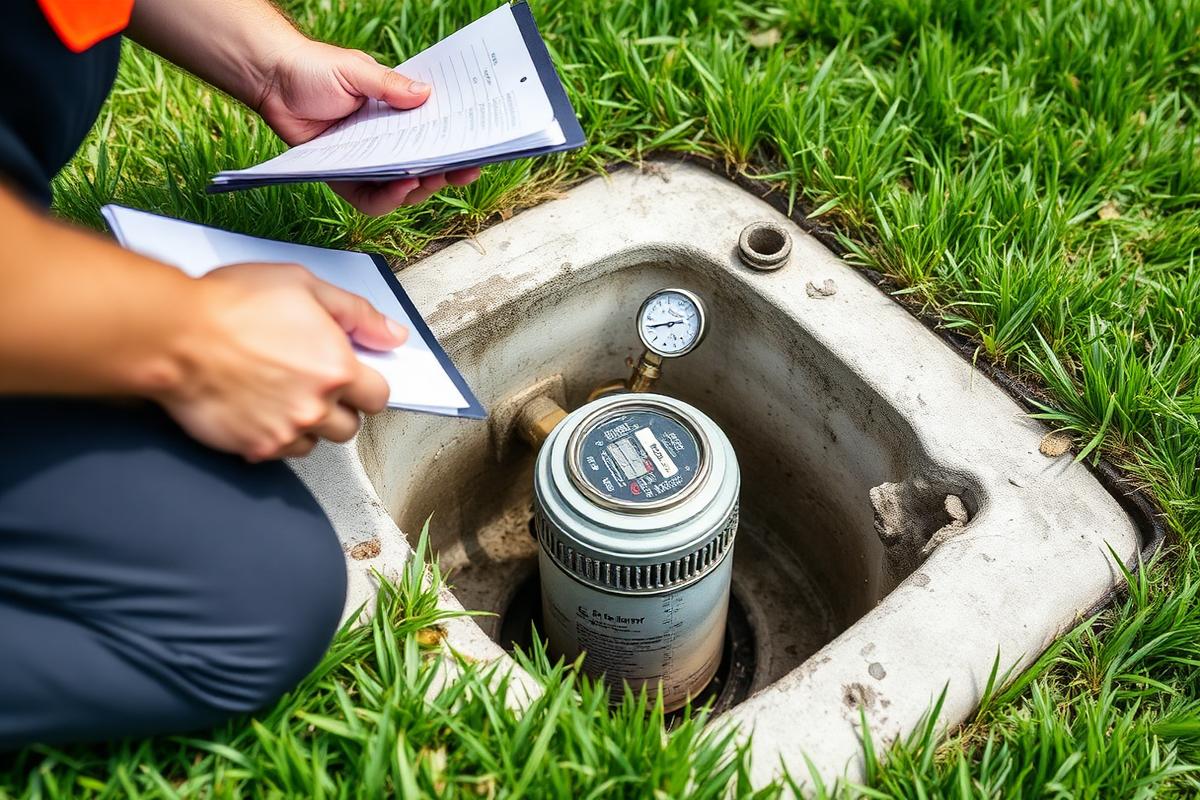
Why Yard Leaks Stay Invisible
In heavy clay soils, a buried leak tends to pond and show itself. In the sand and shell-fill common around Tampa, water drains down and laterally, so a substantial loss can occur with nothing more than a slightly softer patch of lawn — or nothing at all during the rainy season, when the whole yard is wet anyway.
That makes the meter the most honest witness. A meter that keeps moving with the house valve closed puts the loss between the meter and the building, or on an irrigation line teed off that run.
Common Buried Leak Locations
- The service line between the meter and the house, especially at old couplings and repair points
- Irrigation mainlines that stay pressurized between zone valves
- Zone valve manifolds and solenoids that seep continuously
- Lines crossing under driveways and walkways, where settlement and load stress the pipe
- Connections at hose bibbs, backflow devices and pool fill lines
- Older polybutylene or galvanized runs that have reached the end of their service life
How Buried Leaks Are Located
- 1
Separate irrigation from domestic water
Shutting the irrigation supply and re-reading the meter often resolves the question in minutes, because irrigation leaks are extremely common and easy to overlook.
- 2
Trace the pipe route
Knowing where the line actually runs prevents listening in the wrong place. Route tracing precedes pinpointing.
- 3
Listen at contact points
Valves, bibbs and meter fittings transmit sound along the pipe. Ground microphones then walk the route to find the peak.
- 4
Confirm with pressure
Isolating and pressure-testing a section proves whether the suspected run is the one losing water before any digging occurs.
Why It Matters Beyond the Water Bill
A continuous underground leak moves soil. Over time that can undermine driveways, walkways, patio pavers and the fill beneath a slab edge. Locating the leak precisely also keeps excavation to a single small opening instead of a trench across a finished landscape.
Not sure where the water is coming from?
Describe what you are seeing and we can explain how the investigation would be approached on your property.
Frequently Asked Questions
- Can a water leak be underground with no wet spot?
- Yes, and it is common in sandy soil. Water drains away from the leak rather than pooling, so meter behavior and pressure testing matter more than visual inspection.
- Can you find a leak under a driveway?
- Buried lines under concrete and pavers are located the same way as open ground — route tracing, acoustic listening at contact points and pressure isolation — so that any opening made is as small as possible.
Related Pages
For the wider picture, see our overview of leak detection services in Tampa.