Slab Leak Detection in Tampa, FL
A slab leak is a failure in a water line routed beneath a concrete foundation. Because the pipe is encased or buried under the slab, the leak is invisible until it either raises the water bill or works its way to the surface.
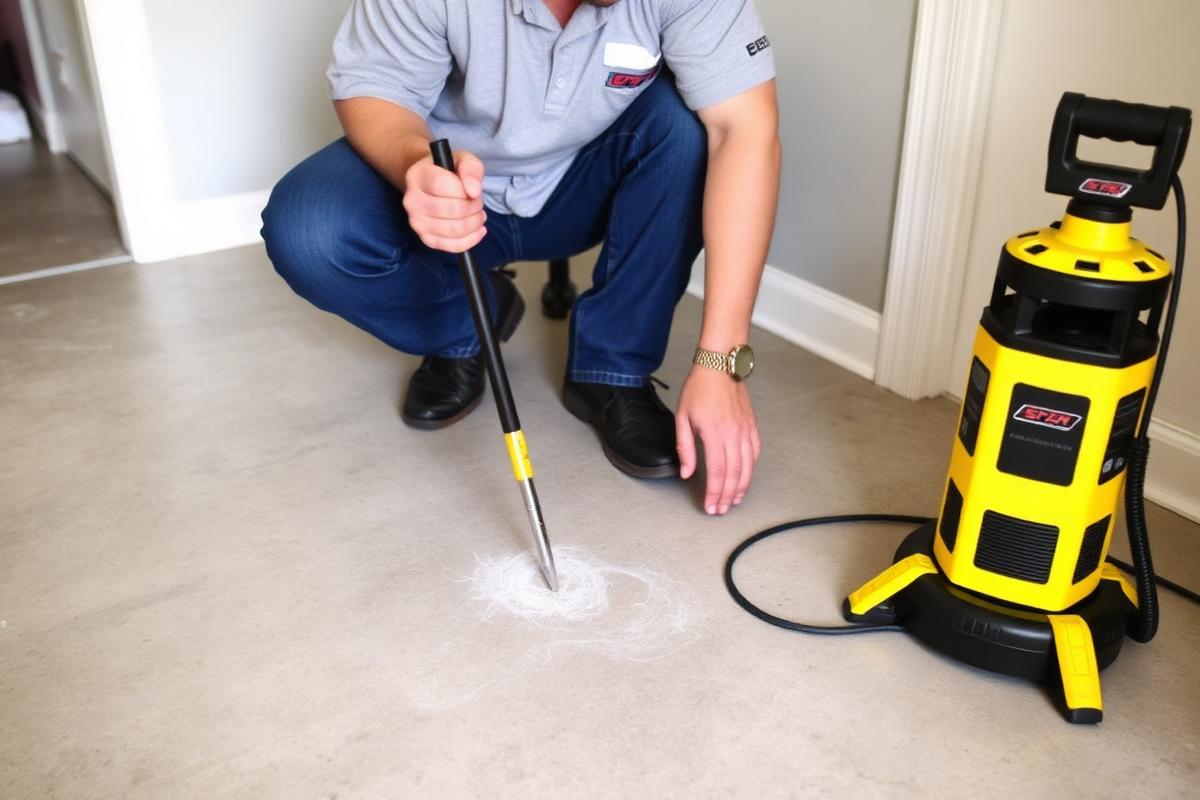
Why Slab Leaks Are Common Here
Slab-on-grade construction dominates much of the Tampa area. Rather than running through a basement or crawlspace, hot and cold supply lines are routed under or through the concrete, which puts them in direct contact with soil, moisture and, in older builds, concrete itself.
Copper in contact with certain soils and with concrete can corrode from the outside in. Add abrasion where a line crosses a rough spot, thermal expansion cycling on the hot line, and settlement stress, and the result is a pinhole rather than a dramatic burst.
Symptoms of a Slab Leak
- A warm or hot area on the floor that does not correspond to sunlight or an appliance
- The sound of running water under the floor when no fixture is on
- Cracked or lifting tile, or flooring that has begun to cup or separate
- Baseboards that feel damp, or moisture wicking up the bottom of drywall
- A water bill that rose and stayed high
- Reduced hot water pressure specifically, which points at the hot line
- A musty smell near an interior wall with no plumbing fixture nearby
How a Slab Leak Is Located
- 1
Prove the loss is under the slab
Isolating the interior plumbing from the yard and service line, then separating the hot side from the cold side at the water heater.
- 2
Map the likely pipe route
Fixture locations, manifold layout and construction era narrow where the lines run before any listening begins.
- 3
Listen through the concrete
Ground microphones pick up the turbulence a pressurized pinhole produces. Readings are taken in a grid, not a single spot, to find the peak.
- 4
Corroborate the mark
Thermal scanning on a hot-line leak and pressure behavior on the isolated section should agree with the acoustic peak before concrete is ever cut.
What Accuracy Saves
Cutting concrete is destructive and slow. Flooring has to be removed, the slab has to be opened, spoil has to be carried out, and the area has to be patched afterward. A location that is off by even a couple of feet can double the size of that opening.
Accurate location also informs the repair strategy. Sometimes a spot repair through a small opening is reasonable; sometimes rerouting the line overhead or around the slab makes more sense than repeatedly opening concrete. That decision depends on knowing exactly where the failure is and what condition the surrounding pipe is in.
Slab Leak or Something Else?
Not every wet floor is a slab leak. A failed shower pan, a leaking supply connection behind a vanity, an air handler condensate line, and water intrusion from outside grade can all produce similar wet spots. Ruling those out is part of the investigation, and it is why isolation testing comes before listening equipment.
Not sure where the water is coming from?
Describe what you are seeing and we can explain how the investigation would be approached on your property.
Frequently Asked Questions
- How do I know if I have a slab leak?
- The strongest early indicators are meter movement with all fixtures off, an unexplained bill increase, and a warm spot on the floor. Any one of those on a slab-built home justifies a detection visit.
- Can leak detection find leaks under concrete?
- Yes. Acoustic listening through the slab, combined with pressure isolation and thermal scanning, is the standard approach for locating a leak under concrete without exploratory demolition.
- Is a slab leak an emergency?
- It is rarely a flood, but it is continuous. Water under a slab can undermine soil and saturate flooring over time, so it should be located promptly rather than monitored indefinitely.
Related Pages
For the wider picture, see our overview of leak detection services in Tampa.