Hidden Leak Detection
A hidden leak is one where the evidence and the cause are in different places. The work is less about equipment and more about eliminating possibilities in a sensible order.
Why Water Shows Up in the Wrong Place
Water inside a building moves along whatever surface it meets first. A pinhole in a wall cavity can run down a stud, cross a bottom plate, travel under a tile bed and appear in an adjacent room. On a second floor it can follow a joist several feet before finding a seam in the ceiling below.
This is why chasing the stain is unreliable. The visible damage tells you where water exits, and the exit point is frequently the lowest accessible opening rather than the failure itself.
The Elimination Sequence
- Confirm continuous loss at the meter, which separates supply leaks from use-dependent drain leaks
- Test fixtures individually so a failing toilet flapper or shower valve is not mistaken for a concealed pipe
- Map moisture with a meter to find the wettest point rather than the most visible one
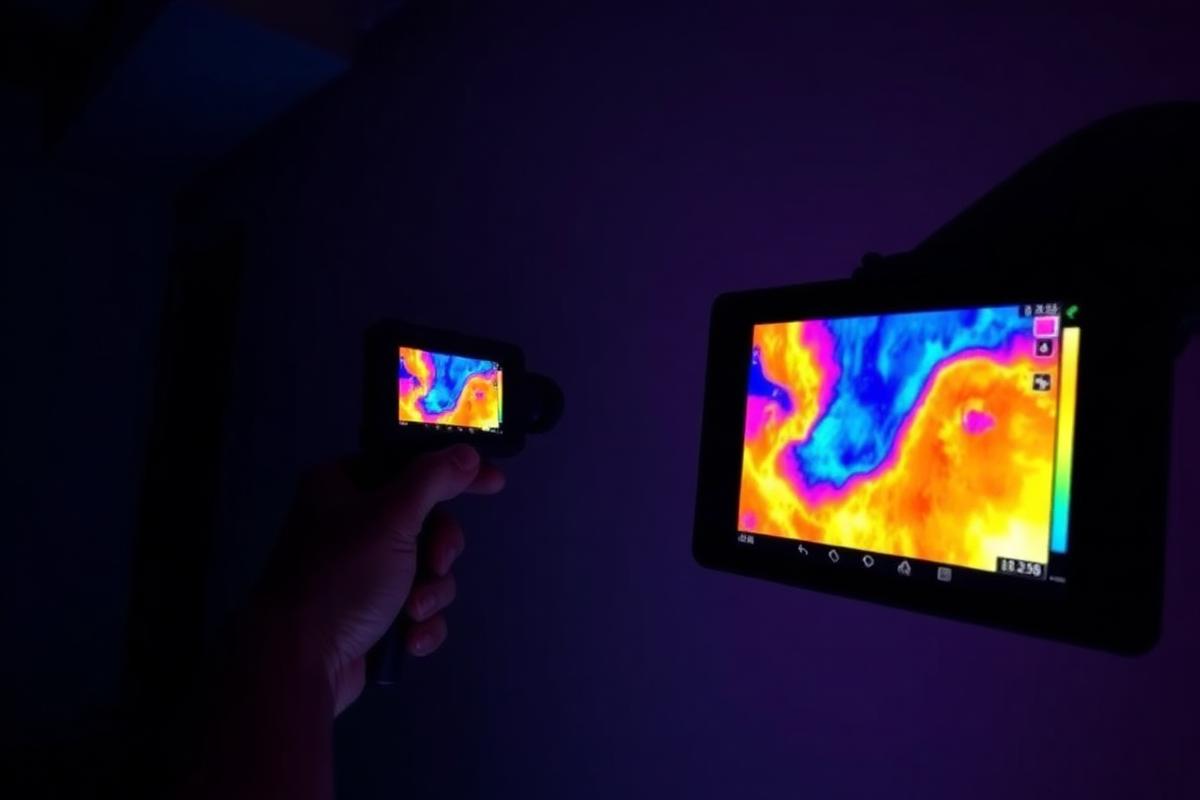
- Scan with thermal imaging where temperature difference exists, then verify with a probe
- Listen along suspected runs with amplification to find pressurized turbulence
- Isolate and pressure-test the suspect section to confirm before opening anything
Where Hidden Leaks Are Usually Found
Shower valve bodies and pan connections, tub overflow gaskets, laundry supply boxes, refrigerator and ice-maker lines, toilet supply connections, water heater fittings in closets, and the transitions where copper meets other materials. In slab homes, add the under-slab supply runs; in two-story homes, add the horizontal runs above finished ceilings.
What We Can Tell You and What We Cannot
Detection can establish that water is being lost, which system is losing it, and where the loss is concentrated. What it cannot always determine from the surface is the exact fitting involved or how long it has been leaking. Those become clear only once controlled access is made — which is exactly why we want that access to be small and in the right place.
Not sure where the water is coming from?
Describe what you are seeing and we can explain how the investigation would be approached on your property.
Frequently Asked Questions
- How do you find a hidden water leak?
- By proving continuous loss at the meter, isolating systems until one fails to hold, then narrowing the location with moisture mapping, thermal scanning and acoustic listening before opening any finish.
- Could a musty smell be the only symptom?
- Yes. Persistent musty odor in one area with no visible water is a common presentation of a slow concealed leak, and it is worth investigating before finishes are damaged further.
Related Pages
For the wider picture, see our overview of leak detection services in Tampa.