Water Leak in a Wall
Wall leaks are often discovered late, because a stud cavity can hold and channel water for a long time before the drywall face shows anything.
What Could Cause This?
- A pinhole or fitting failure on a supply line inside the cavity
- A shower or tub valve body leaking behind the wall
- A washing machine supply box or its connections
- A refrigerator or ice maker line run through the wall
- A drain or vent line leaking only during use
- Exterior water intrusion at a window, penetration or stucco crack
What Should You Check?
Establish whether the wetting is continuous or use-dependent. Continuous wetting with meter movement points at pressurized supply. Wetting only after a shower, or only after heavy rain, points at a drain or the building envelope.
Feel for temperature: a hot-water leak often makes the drywall noticeably warm. Note the vertical extent of the damage — water enters high and exits low, so the highest wet point is closer to the source than the stain at the floor.
When Does It Indicate a Hidden Leak?
Bubbling paint, soft drywall, swollen baseboard or a musty smell at an outlet, combined with continuous meter movement, is a concealed pressurized leak in all but unusual cases. That combination justifies detection rather than opening the wall to look.
What Happens Next
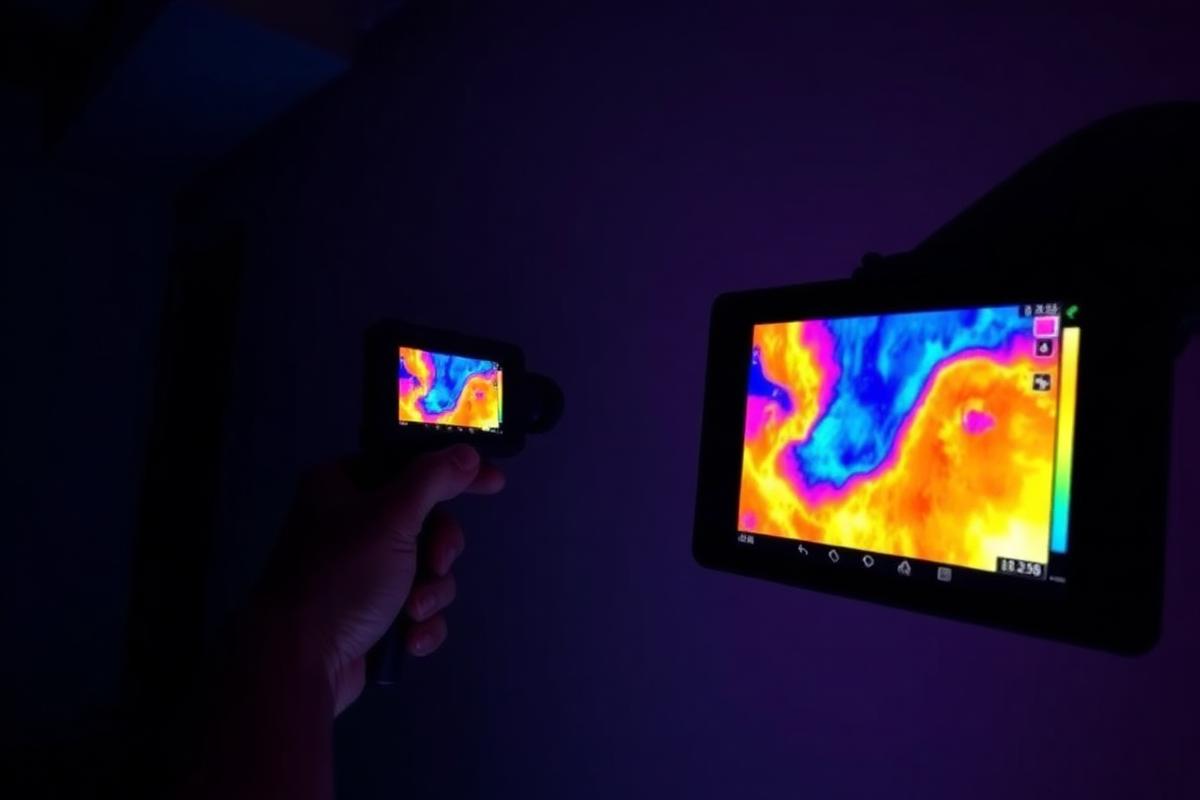
Moisture mapping finds the wettest point, thermal scanning shows the shape of the wet area, and isolating the branch serving that wall proves whether it holds pressure. Access is then cut once, at the located point, in the least conspicuous place that reaches it.
Not sure where the water is coming from?
Describe what you are seeing and we can explain how the investigation would be approached on your property.
Frequently Asked Questions
- Should I cut the drywall to look?
- Not as a first step. Cutting in the wrong place adds repair work without answering the question. Mapping and pressure testing identify the location first.
Related Pages
If you are still narrowing things down, start with Tampa leak detection.