Signs of a Hidden Water Leak
Hidden leaks almost always announce themselves before they flood anything. The signals are just easy to explain away.
The Most Reliable Signs
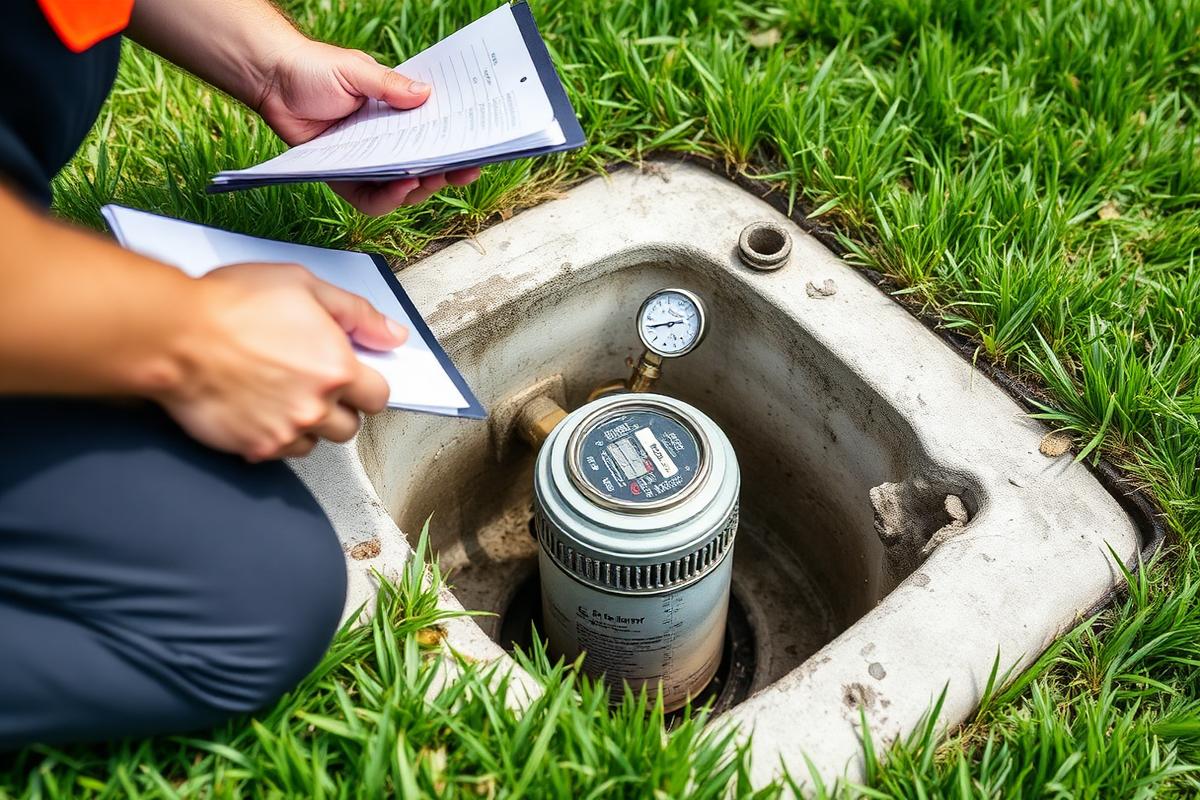
- The meter's low-flow indicator moves with every fixture and appliance off — this is the single strongest sign
- A bill that rose and then stayed elevated without a change in household use
- The sound of running or hissing water when nothing is on
- A warm or hot patch on a tile or concrete floor
- Persistent musty odor concentrated in one area of the house
- A lush or spongy patch of lawn during dry weather
Signs That Need Interpretation
Some symptoms have several possible explanations. Reduced pressure can come from a leak, but also from a failing pressure regulator or scaled galvanized piping. Ceiling staining can be plumbing, but in Florida it is very often air handler condensate. Cracked tile can be a slab leak or ordinary settlement.
This is why the meter test comes first. It costs nothing and it separates continuous pressurized loss from everything else.
How to Run the Meter Test
- 1
Shut everything off
All fixtures, the ice maker, the irrigation controller, any pool auto-fill and the water softener cycle.
- 2
Read the meter
Note the digits and the position of the small low-flow dial or triangle.
- 3
Wait and re-read
Leave the property undisturbed for at least thirty minutes, then compare. Any movement means water is leaving the system.
- 4
Isolate the house
Close the main shutoff at the building and repeat. If the meter still moves, the loss is outside — service line or irrigation.
Symptoms Inside the Building
- Damp or discolored flooring, cupped wood, loose tile or a carpet edge that stays cool and heavy
- Ceiling or wall stains that return after being painted over
- Bubbling, blistering or peeling paint, and baseboards separating from the wall
- A persistent musty odor, or visible mold and mildew in a cabinet, closet or corner
- A warm strip on a slab floor (hot line) or an unexplained cold patch
- Pressure that has dropped gradually across every fixture rather than at one tap
Symptoms Outside the Building
- A patch of lawn that stays saturated or unusually green while everything around it dries out
- Standing water, soft ground or settled pavers along the run between the meter and the house
- Erosion, sinkholes in mulch beds, or soil washing out near the equipment pad
- Cracks appearing in a driveway, walkway or slab edge, or a door that has started to bind
- Irrigation zones that stay wet between cycles, or a valve box holding water
- Pool water dropping faster than a reference container over the same period, with the auto-fill off
Which Kind of Leak the Symptom Suggests
- Visible leak: water at a fixture, valve or hose bib you can point at — a repair call, not a detection call
- Hidden plumbing leak: meter movement with everything off, plus damp finishes, stains or musty odor indoors
- Slab leak: warm flooring, sound of water underfoot, damp slab edges with no fixture nearby
- Underground or water line leak: meter still moving after the house is isolated at the main, wet ground outside
- Pool leak: pool level dropping faster than the bucket reference, wet ground near the pad or deck
- Irrigation leak: loss on the irrigation side of the system, wet zones, or a controller that has been off for days
Observations You Can Safely Make Yourself
Everything worth checking is non-destructive: read the meter, listen in a quiet house at night, feel the floor with a bare hand, look under sinks and in cabinets with a flashlight, walk the yard in the early morning when saturation shows, and run a bucket comparison on the pool with the auto-fill disabled.
What not to do: do not cut into drywall or flooring to look, do not break concrete, do not dig along a suspected line, and do not add sealants or dyes to a plumbing system. Exploratory damage has to be repaired whether or not it was in the right place, and it can destroy the readings detection depends on.
When to Stop Waiting
If the meter moves with the property shut down, there is no ambiguity: water is being lost continuously. That is the point to bring in detection, because every day it continues is more water and more saturation in whatever the water is running through.
What Should I Do Next?
- 1
Run the meter test
It is free, takes half an hour, and separates continuous pressurized loss from every other explanation.
- 2
Isolate what you can
Close the main at the building, turn off the irrigation controller and the pool auto-fill, then re-read. This tells you whether the loss is inside or outside.
- 3
Write down what you observed
When it started, which symptoms appeared, and what changed. This history routinely eliminates whole systems before any equipment comes out.
- 4
Call for detection
Describe the readings and symptoms and we can explain how the property would be approached — and, where relevant, which methods apply to a slab, buried line or pool.
Not sure where the water is coming from?
Describe what you are seeing and we can explain how the investigation would be approached on your property.
Frequently Asked Questions
- Do I need leak detection if I cannot see water?
- If the meter moves with everything off, yes. Invisible leaks are the ones that do the most cumulative damage precisely because nothing forces you to act.
- Can a hidden leak exist without the bill going up?
- A very small leak can hide inside normal seasonal variation, and a pool auto-fill or irrigation leak can spread the cost across a bill you already expect to be high. Meter behavior is the more reliable signal.
- Does a musty smell always mean a plumbing leak?
- No. In Florida it can also come from air handler condensate, roof intrusion or humidity in an unventilated space. It is a reason to test, not a diagnosis.
Related Pages
If you are still narrowing things down, start with Tampa leak detection.